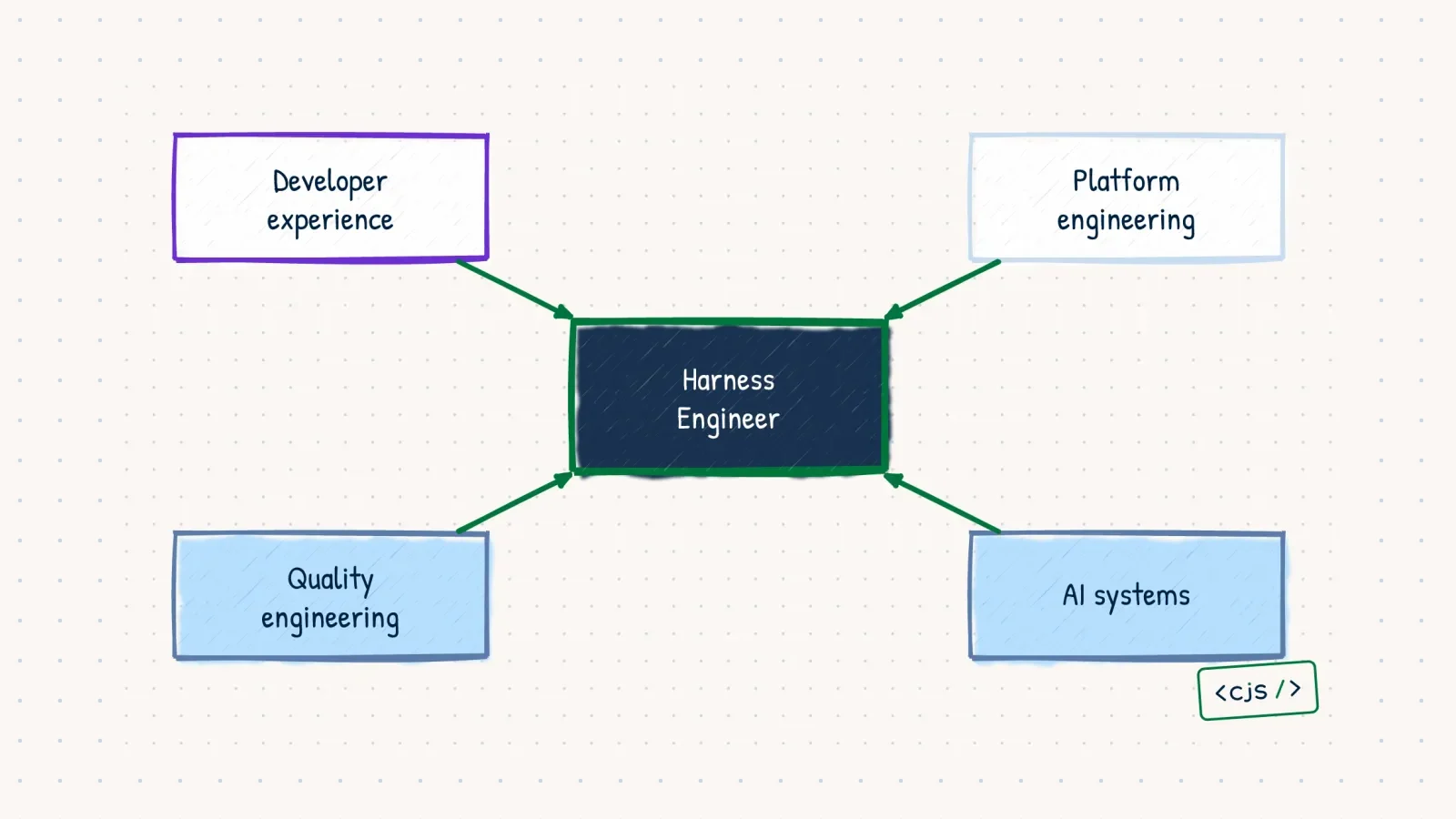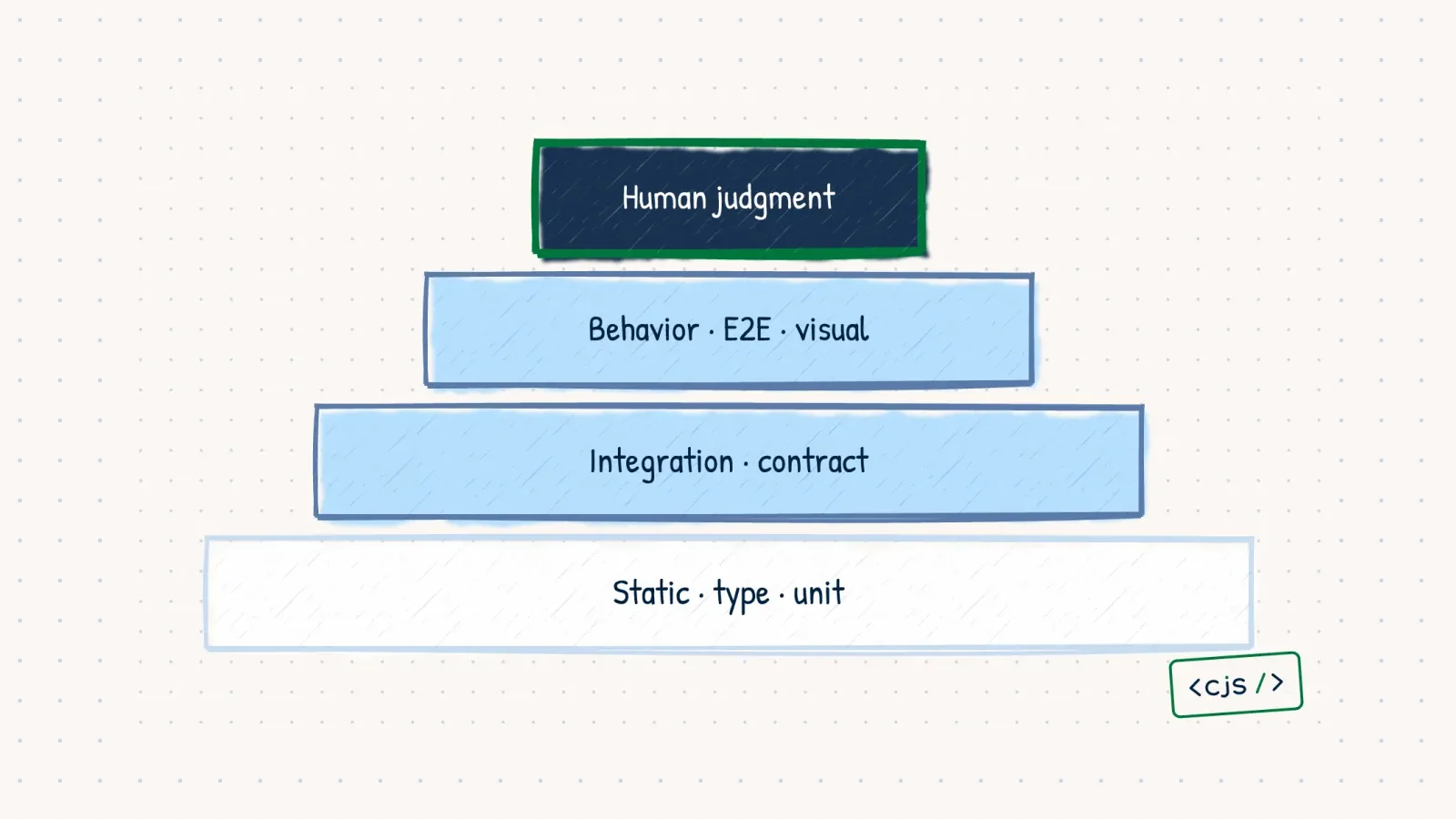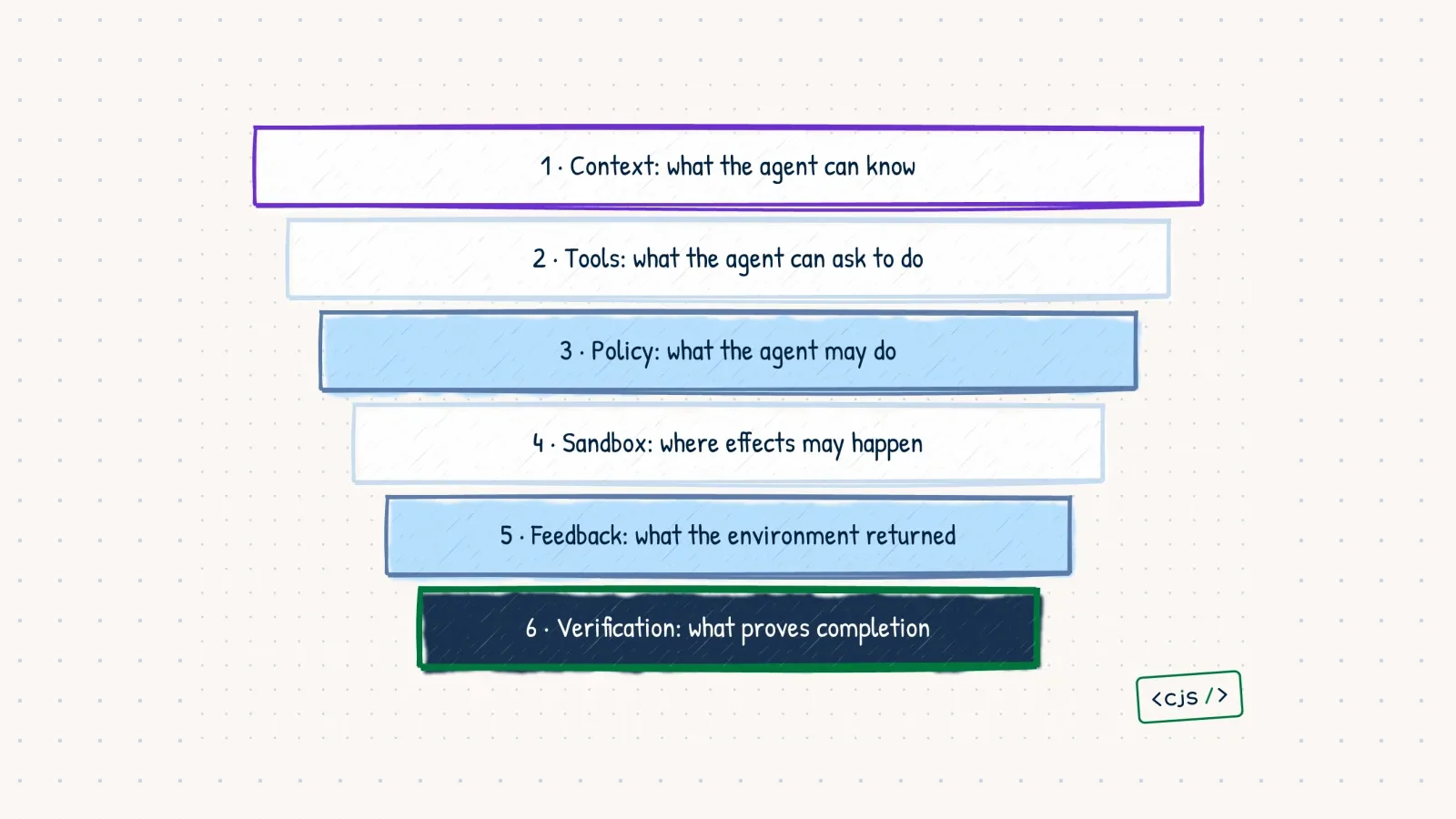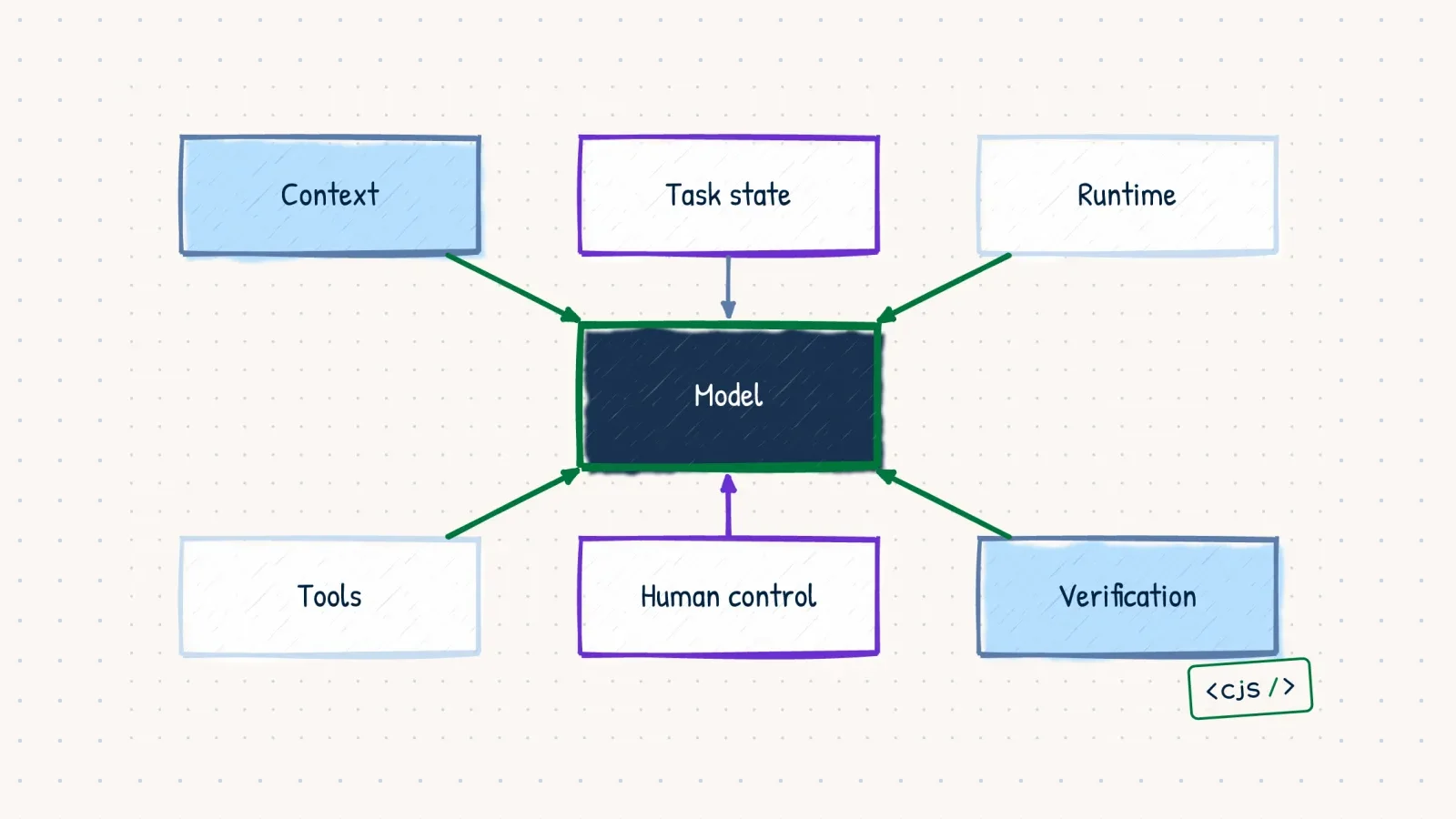
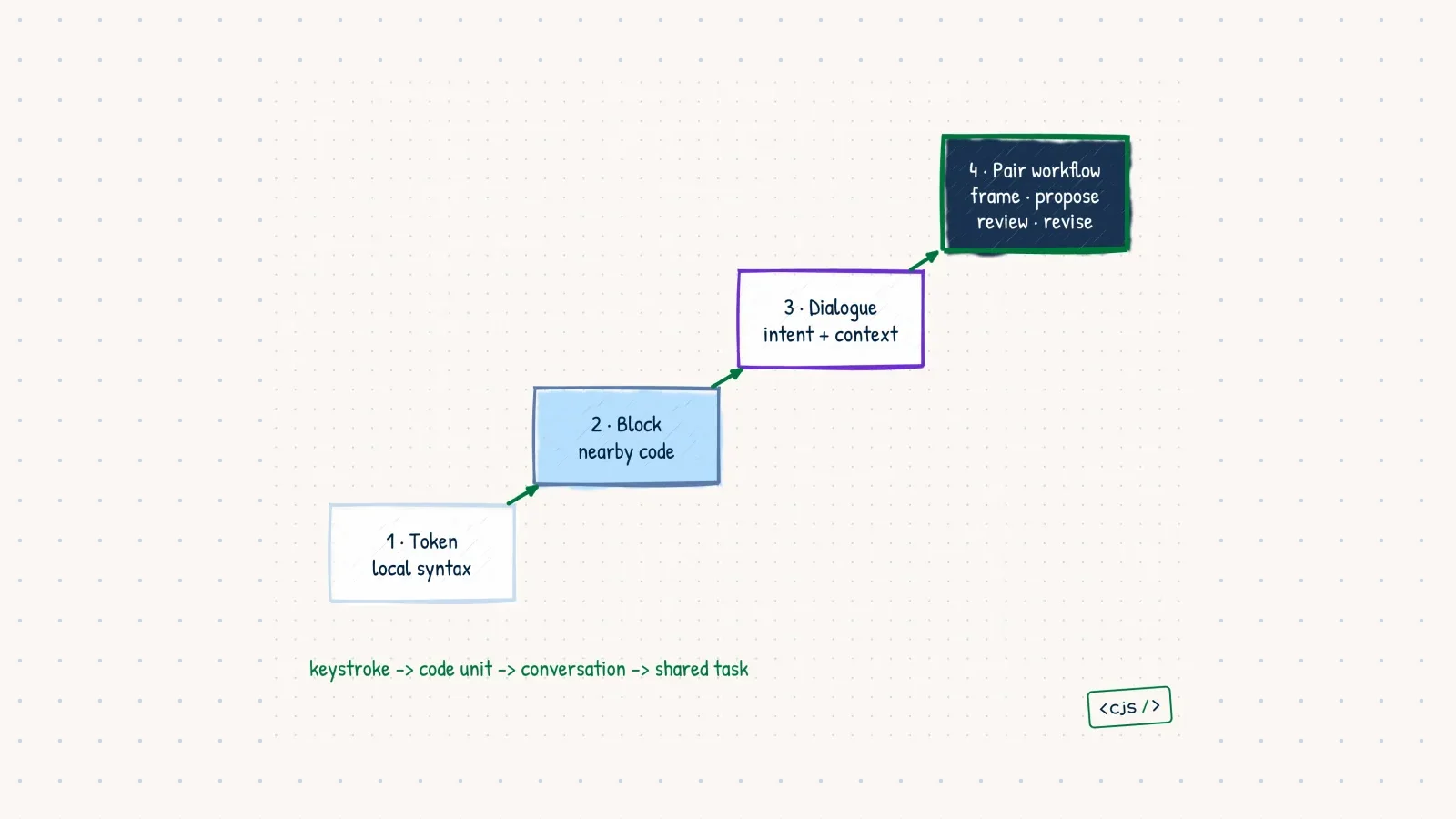
Autocomplete shortens a keystroke. AI pair programming tries to shorten the distance from an intent to a reviewed change. Those are not the same job.
The transition happened in steps. Each step widened what the assistant could see, what it could return, and what the developer had to verify. The important history is therefore not a sequence of model launches. It is the expansion of the task boundary between human and machine.
Autocomplete worked inside a narrow contract
Traditional code completion is powerful because its contract is small and legible. The editor knows the language grammar, the symbols in scope, the type under the cursor, and the characters already typed. It returns a list of members, parameters, keywords, or snippets. The developer selects one and continues driving.
Microsoft’s IntelliSense documentation still describes this core clearly: list members, parameter information, quick information, and complete word. These features remove recall and typing costs without claiming to understand the whole task.
That narrowness is a feature. Suggestions are constrained by the local program state, their effect is usually small, and rejection is cheap. The tool rarely needs to know why the developer is writing the method.
Generative completion crossed the code-unit boundary
Code models changed the size and shape of the proposal. Instead of choosing a known symbol, a developer could write a comment or function signature and receive a new line, block, test, or function.
The 2021 Codex paper evaluated program synthesis from docstrings rather than member selection. GitHub’s first Copilot technical preview presented the same interaction inside the editor: surrounding code became context, while whole lines and functions became possible outputs.
That was a qualitative shift, but the interface still resembled autocomplete. A proposal appeared near the cursor; the developer accepted, rejected, or edited it. The assistant could generate more code without yet sharing the broader problem.
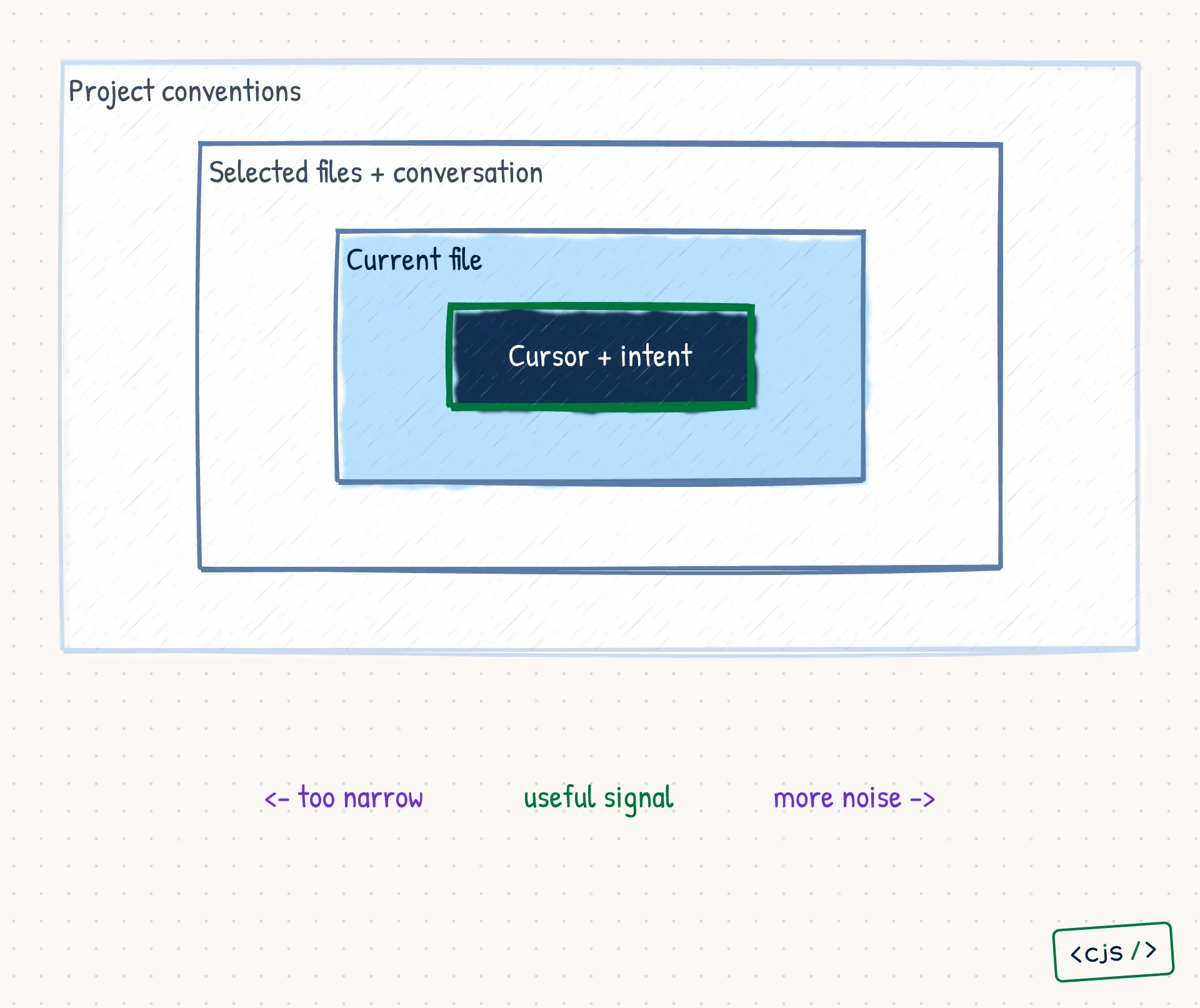
A larger output also creates a larger verification burden. A completed member can often be checked by the compiler. A generated function may depend on unstated requirements, hidden repository conventions, security assumptions, or tests the model never saw. The context aperture must widen with the proposal.
Pair programming is a protocol, not a product label
Human pair programming offers a useful standard for the word “pair.” In the classic practice, two programmers work on the same problem at one workstation. One acts as driver; the other reviews, anticipates, questions, and helps steer. The roles rotate, and the value comes from continuous communication and review—not from producing twice as many keystrokes.
Laurie Williams, Robert Kessler, Ward Cunningham, and Ron Jeffries described that collaborative process in their 2000 paper, Strengthening the Case for Pair Programming.
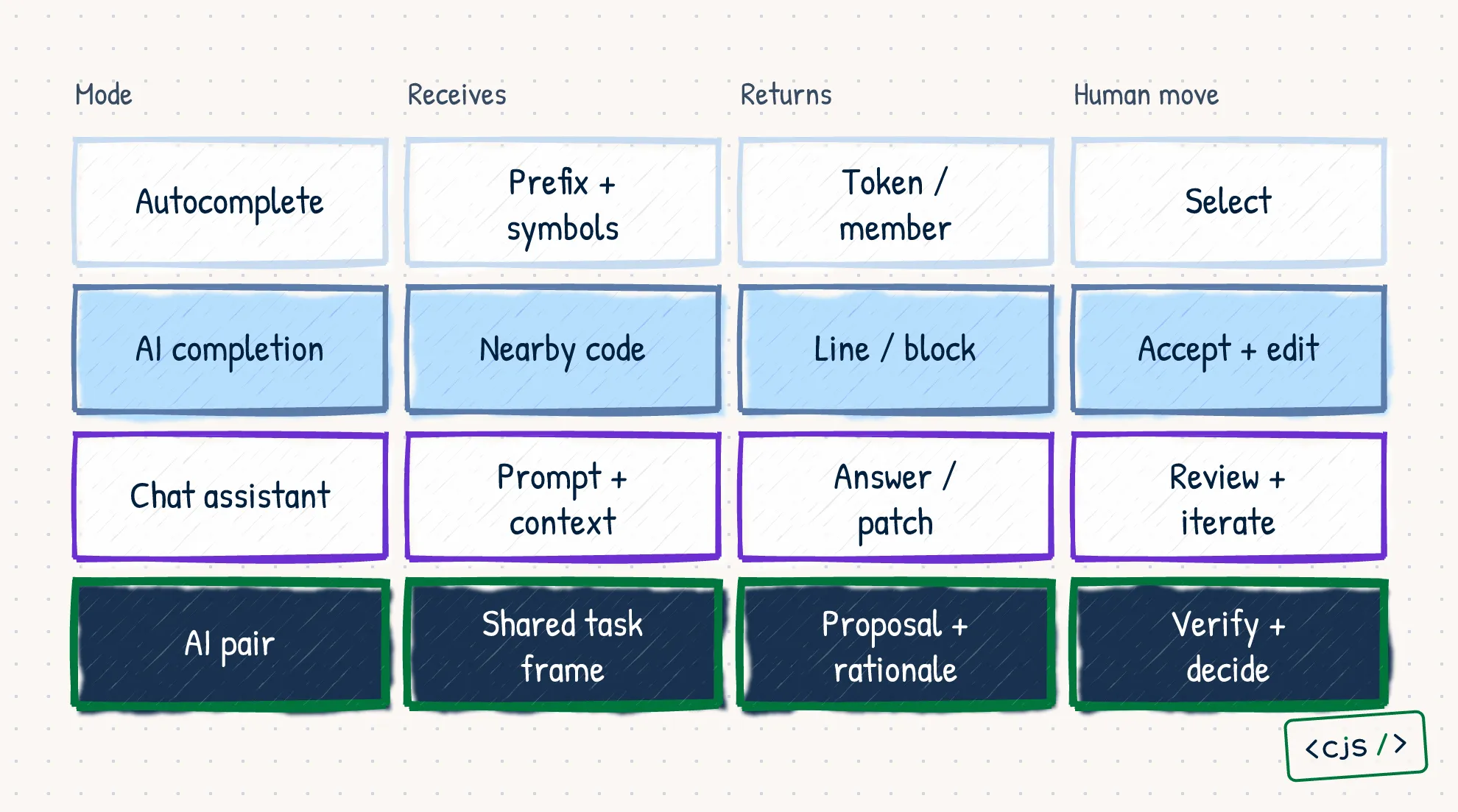
An AI suggestion is not automatically a pair. If the machine emits code and the human taps accept, the interaction is closer to probabilistic completion. Pairing begins when both sides operate within a shared task frame: intent is stated, context can be corrected, a proposal can be inspected, and feedback changes the next proposal.
The symmetry is limited. The human remains accountable for goals, trade-offs, safety, and acceptance. The assistant contributes speed, alternatives, explanation, and persistent attention. Calling this relationship a pair is useful only when that asymmetry stays visible.
Conversation widened the shared task
Chat changed the unit of input from a partial line to an explicit request. It also allowed follow-up: explain this function, propose a test, compare two designs, fix the failure, or revise the patch after a constraint appears.
GitHub’s 2023 Copilot X announcement marked that interface expansion from inline completion toward chat, pull requests, documentation, and the command line. The historical significance is not the brand. It is that assistance moved beyond one cursor and into more of the developer workflow.
Conversation carries intent and correction, but it does not guarantee shared understanding. The assistant still sees only the context supplied by the product and developer. A missing file, stale instruction, or invisible test can make a fluent answer locally plausible and globally wrong.
This is why model choice should follow the task boundary. A small, fast completion model may be ideal for predictable local edits. A larger conversational model earns its cost when repository context, ambiguity, or trade-offs matter. The separate article GPT-6 Astra Costs More. Use It Where It Compounds. develops that routing decision; the principle here is simpler: do not pay for broad reasoning when the contract is only “finish this token.”
Reliable pairing closes the review loop
A useful AI pair workflow has five moves:
- Frame: the human states the goal, constraints, and definition of done.
- Propose: the assistant produces an explanation, plan, patch, or test.
- Inspect: the human reads the diff and challenges assumptions.
- Verify: tools return compiler, test, lint, security, or runtime evidence.
- Decide: the human accepts, redirects, narrows, or stops.
GitHub’s responsible-use guidance for Copilot Chat makes the same operational point: generated code can be inaccurate or insecure, so it must be reviewed and tested. Pairing is not a transfer of responsibility.
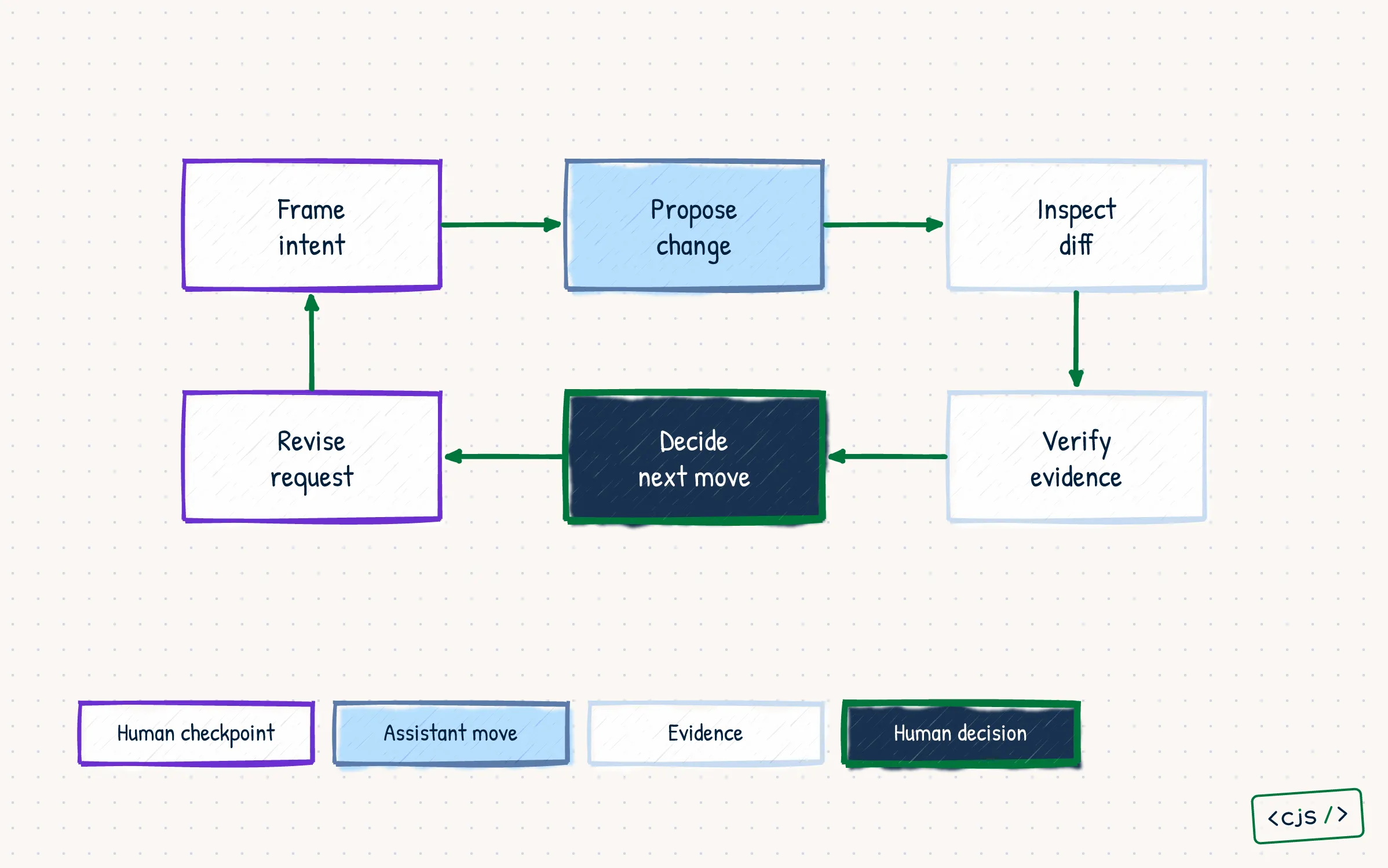
The loop also explains why feedback quality matters. A vague request produces a broad proposal. An unreadable diff hides risk. A test that says only “failed” cannot guide revision. Good pairing depends on the same feedback infrastructure that continuous integration made shared.
The next boundary is action
Autocomplete waits at the cursor. AI completion proposes a larger code unit. Chat sustains a conversation around intent and context. AI pair programming adds an explicit review protocol.
The next step changes the machine’s role again: instead of only proposing an action for the human to perform, the model selects and invokes tools, observes their results, and uses those observations to choose another move. That reason-and-act loop is where conversational assistance begins to become an agent—and where the surrounding harness becomes impossible to ignore.
Sources
- Microsoft Learn — IntelliSense in Visual Studio
- Williams, Kessler, Cunningham, and Jeffries — Strengthening the Case for Pair Programming
- OpenAI — Evaluating Large Language Models Trained on Code
- GitHub — Introducing GitHub Copilot
- GitHub — GitHub Copilot X
- GitHub Docs — Responsible use of Copilot Chat